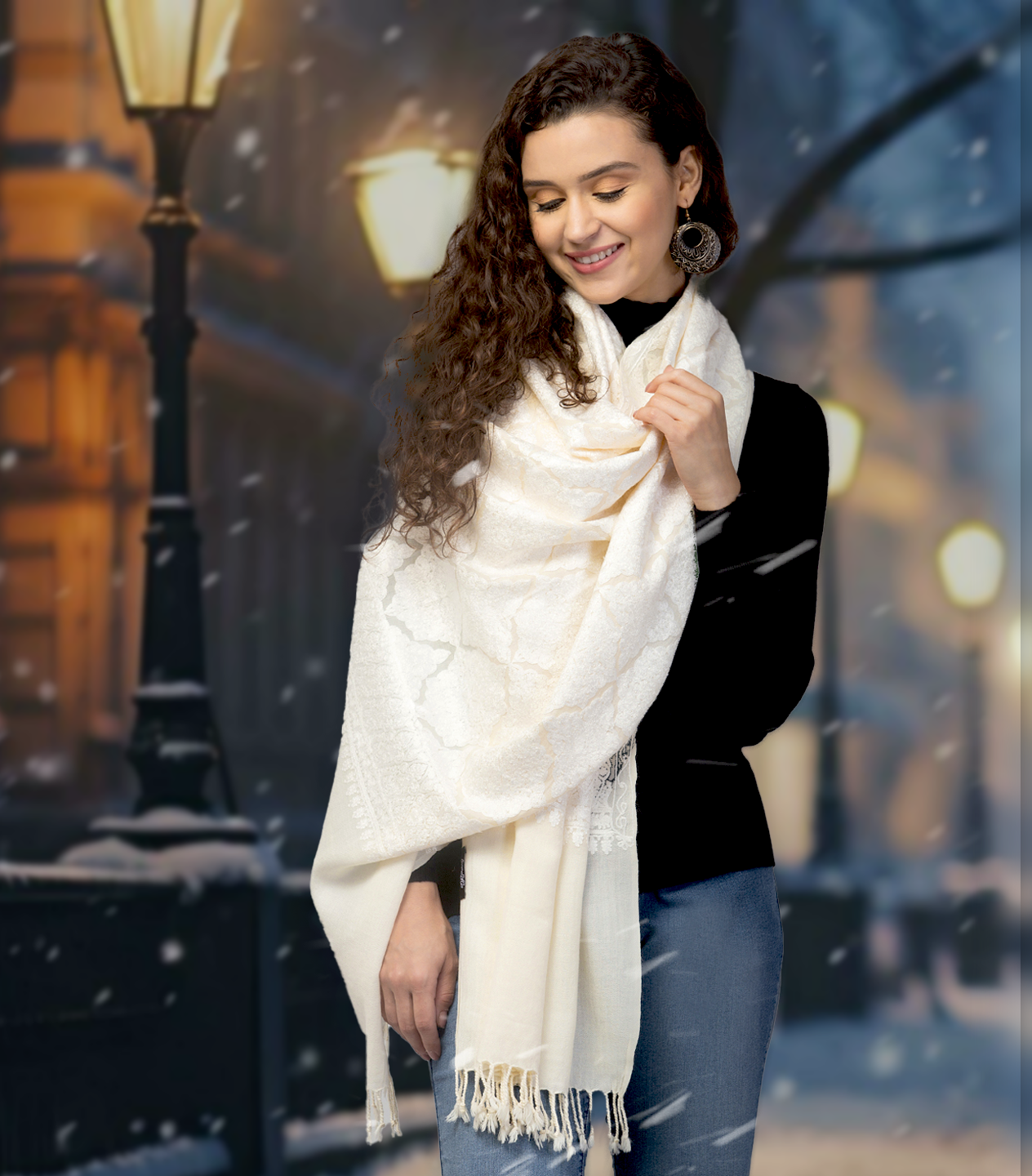
Cashmere is a fine natural fibre obtained from the soft undercoat of the cashmere goat. Unlike regular sheep’s wool, cashmere fibres are significantly finer and softer, giving the fabric its signature smooth texture. These fibres help trap heat efficiently, making cashmere shawls warm enough for winter while remaining breathable and comfortable to wear throughout the day. The quality of cashmere is often determined by the fineness and length of its fibres. Finer fibres create a softer feel, while longer fibres contribute to stronger, more durable yarns that resist pilling over time. Where Does Cashmere Wool Come From? Cashmere wool is sourced from cashmere goats that thrive in high-altitude regions with harsh winters. These goats naturally develop an ultra-soft undercoat to protect themselves from freezing temperatures. Some of the world’s most renowned cashmere-producing regions include: Mongolia – Known for producing some of the finest and longest cashmere fibres due to its extremely cold climate. Inner Mongolia (China) – One of the largest producers of premium-quality cashmere used by luxury textile manufacturers worldwide. Kashmir (India) – Traditionally associated with exquisite cashmere weaving and shawl-making, although the raw fibre itself is available in limited quantities. Afghanistan, Iran, and parts of Central Asia – These regions also produce quality cashmere, though in comparatively smaller volumes. Contrary to popular belief, Kashmir is globally celebrated more for its centuries-old weaving and craftsmanship than for being the largest source of raw cashmere fibre. How Is Cashmere Wool Collected? One of the most fascinating aspects of cashmere production is that the fibre is not typically sheared like sheep’s wool. Each spring, as temperatures begin to rise, cashmere goats naturally shed their soft winter undercoat. During this seasonal moulting period, herders carefully comb the goats using specialised combs to gently collect the fine fibres. This process helps preserve the quality of the fibre while allowing the goats to naturally transition into warmer weather. A single cashmere goat yields only about 150–250 grams of usable cashmere fibre each year. Since several goats are needed to produce enough fibre for just one shawl, genuine cashmere remains one of the world’s most valuable natural fibres. How Are Cashmere Shawls Made? Creating a cashmere shawl is a meticulous process that combines traditional skills with modern textile techniques. The journey typically involves the following steps: Sorting and Cleaning – The collected fibres are carefully cleaned to remove dust, dirt, and coarse outer hairs. Dehairing – Fine cashmere fibres are separated from the coarser guard hairs, leaving behind only the soft undercoat. Spinning – The refined fibres are spun into delicate yet durable yarn. Weaving or Knitting – Depending on the desired design, the yarn is woven or knitted into fabric. Finishing – The shawl is washed, softened, trimmed, and quality-checked to enhance its luxurious feel and appearance. Many premium cashmere shawls also feature handcrafted embroidery, woven borders, or intricate jacquard patterns that showcase the artistry of skilled artisans. Why Are Cashmere Shawls So Expensive? The luxurious price of cashmere is a reflection of its rarity and the craftsmanship involved. The limited amount of fibre obtained from each goat, the labour-intensive collection process, and the extensive refinement required before weaving all contribute to its premium value. Additionally, high-quality cashmere offers exceptional longevity. With proper care, a well-made cashmere shawl can remain soft, elegant, and beautiful for many years, making it a worthwhile investment. A Timeless Luxury Cashmere shawls are more than just winter accessories—they are a celebration of nature, heritage, and skilled craftsmanship. From the rugged mountain landscapes where cashmere goats thrive to the expert hands that transform delicate fibres into luxurious shawls, every piece tells a story of quality and tradition. Whether draped over formal attire or paired with everyday outfits, a genuine cashmere shawl offers unmatched softness, warmth, and elegance that continues to make it one of the most cherished textiles in the world. This is a title